
A parkolóktól a városi strandokig – Európa 25 legjobb városi közterülete
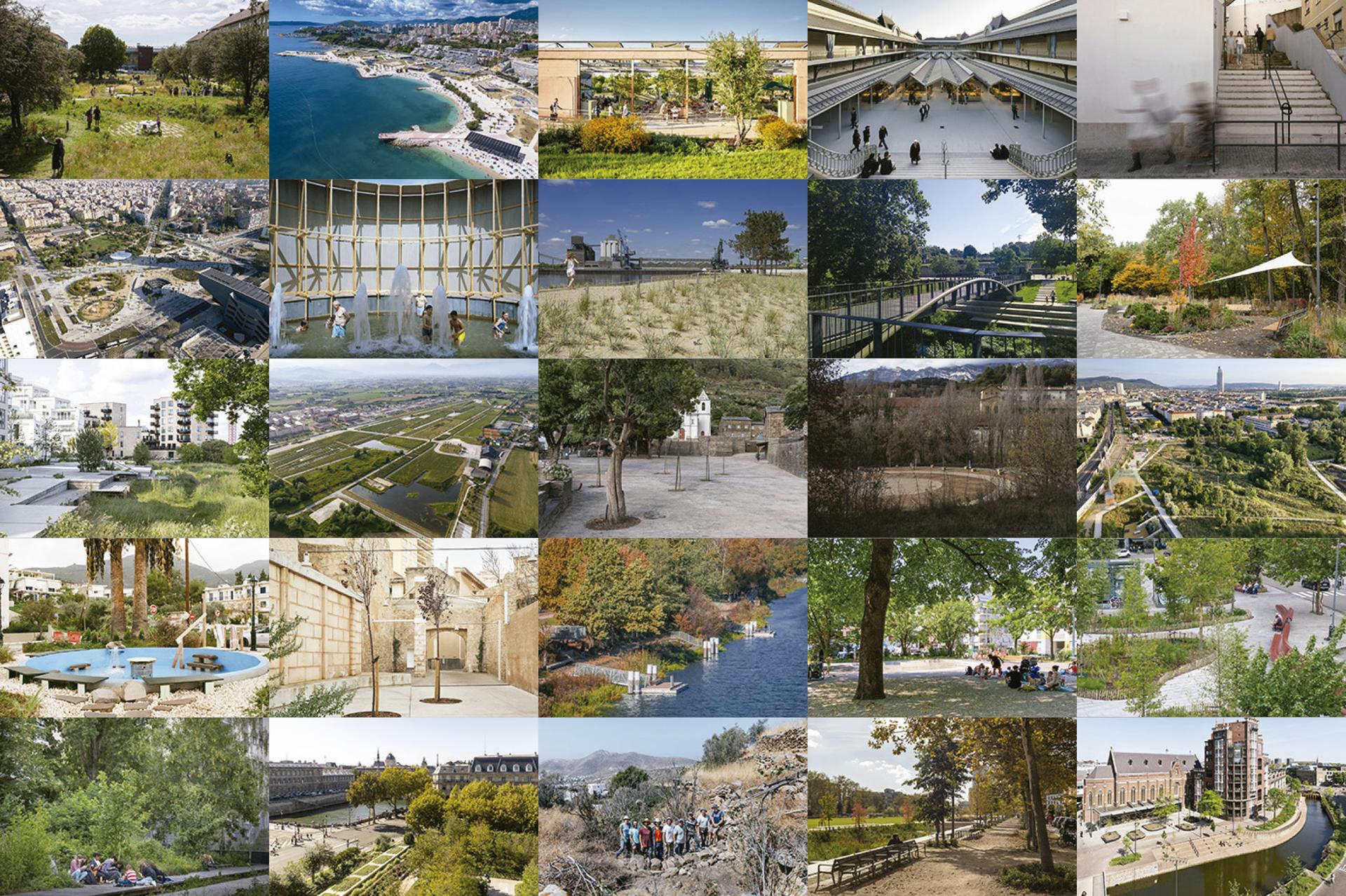
The European Prize for Urban Public Space has just announced the 25 shortlisted projects for this edition, chosen from 381 entries from 38 countries, a hitoric record in participation. Of all of these projects across 14 European countries, the Jury will select the five finalists, which will be announced on 9 September.
From climate shelter in Paris to therapeutic gardens in conflict areas such as Kyiv.
Projects that reflect solutions to transform cities in the face of climate crisis, reconversion of car parks and road junctions into green areas; spaces for mental health and biodiversity, small projects that revive heritage... all of them commit to ecological restoration and social cohesion.
Download the press release and high-resolution photos here.
Tag us at @cccb_barcelona using #PublicSpacePrize26 and we will repost you!
Thank you very much for your support in disseminating Europe's best urban practices.
Press release
On 2 and 3 July, the International Jury, chaired by the architect Eva Prats and comprising Angelika Fitz, Monika Konrad, Inês Lobo, Bas Smets and Philip Ursprung, and Lluís Ortega as secretary, met to select the 25 projects that will be included in the catalogue publshed on the occasion of the edition and the Archive of the European Prize for Urban Public Space, an online resource that brings together the best interventions submitted to the competition
since its creation.
In addition to their social impact, the Jury highlighted the formal rigour, material sensibility and spatial quality of all the interventions, integrated coherently into the existing urban fabric and creating new ways of seeing and designing public space to offer sound responses to today’s challenges of climate emergency, ecological restoration and social cohesion.
The Shortlisted
Projects of different scale and nature
The shortlisted projects represent interventions at different scales and of varying nature that respond to a variety of intervention strategies, including:
Converting buildings into new public infrastructures that reactivate urban centres, such as a former military warehouse in Mannheim (Germany) and the historical market of Porto (Portugal).
Recovering abandoned spaces to promote biodiversity, at the large and the small scale, such as the interventions in Copenhagen (Denmark), Split (Croatia) and Berga (Spain). Also worthy of mention are spaces of wellbeing, like the therapeutic garden built in Kyiv (Ukraine), designed to accompany reinsertion and mental health in places of conflict.
Transforming large transport infrastructures in European cities, like the old railyard in Vienna (Austria) and Paris (France), the Glòries intersection in Barcelona (Spain), the parking space on the old docks of Antwerp (Belgium), the river port in Warsaw (Poland), the transformation of a former industrial site in Køge (Denmark) and Vicenza airport (Italy), converted into an ecological park. These interventions contrast with others at a smaller scale, such as the conversion of a car park into the town square of Piódão (Portugal), and ephemeral projects such as the conversion of a fountain and a roundabout into public baths in Methana (Greece) and Logroño (Spain), respectively.
Projects that respect urban heritage, such as the urban forest on the forecourt of the Council of Paris (France) and the two squares in Brussels (Belgium), and more surgical interventions like the Inner Courtyard project in Inca (Spain) and universal access to the Castle of Lisbon (Portugal), help to create more equitable, inclusive cities. The selection also includes projects that respect natural heritage, like those to preserve Basel’s main green public space (Switzerland), revitalize the seasonal watercourses of the island of Ios (Greece), restore the river Mark in Breda (Netherlands), consolidate the green corridor of the river Leça in Matosinhos (Portugal) or transform the flood defences of a large urban beach in Bremen (Germany).